KNOW YOUR BASIC RIGHTS
In Canada, basic rights are protected by the Canadian Charter of Rights and Freedoms, the Canadian Bill of Rights, and various federal and provincial laws, ensuring fundamental freedoms and equality for all individuals.
Canadian Charter of Rights and Freedoms
The Canadian Charter of Rights and Freedoms, enacted in 1982, is a key document that outlines the fundamental rights and freedoms guaranteed to all Canadians. It includes protections for:
- Fundamental Freedoms: Freedom of conscience, religion, thought, belief, expression, peaceful assembly, and association.
- Democratic Rights: The right to vote and run for public office.
- Mobility Rights: The right to enter, remain in, and leave Canada, as well as the right to move and reside in any province.
- Legal Rights: Rights related to life, liberty, and security, including protection against unreasonable search and seizure, the right to a fair trial, and protection from cruel and unusual punishment.
- Equality Rights: Protection against discrimination based on race, national or ethnic origin, color, religion, sex, age, or mental or physical disability justice.gc.ca+1.
Canadian Bill of Rights
The Canadian Bill of Rights, passed in 1960, was the first federal human rights law in Canada. It guarantees rights such as the right to life, liberty, and security of the person, and the right to enjoy property. However, it is not as comprehensive as the Charter and does not apply to provincial laws justice.gc.ca+1.
Human Rights Protections
In addition to the Charter and the Bill of Rights, Canada has various federal, provincial, and territorial laws that protect human rights. The Canadian Human Rights Act prohibits discrimination in employment and the provision of services based on various grounds, including race, gender, and disability. Each province and territory also has its own human rights legislation that provides additional protections justice.gc.ca+1.
Conclusion
Overall, the framework of rights in Canada is designed to ensure that all individuals are treated with dignity and respect, and that their fundamental freedoms are upheld. The Charter serves as the supreme law, meaning that any law inconsistent with it can be challenged in court www.canada.ca+1.
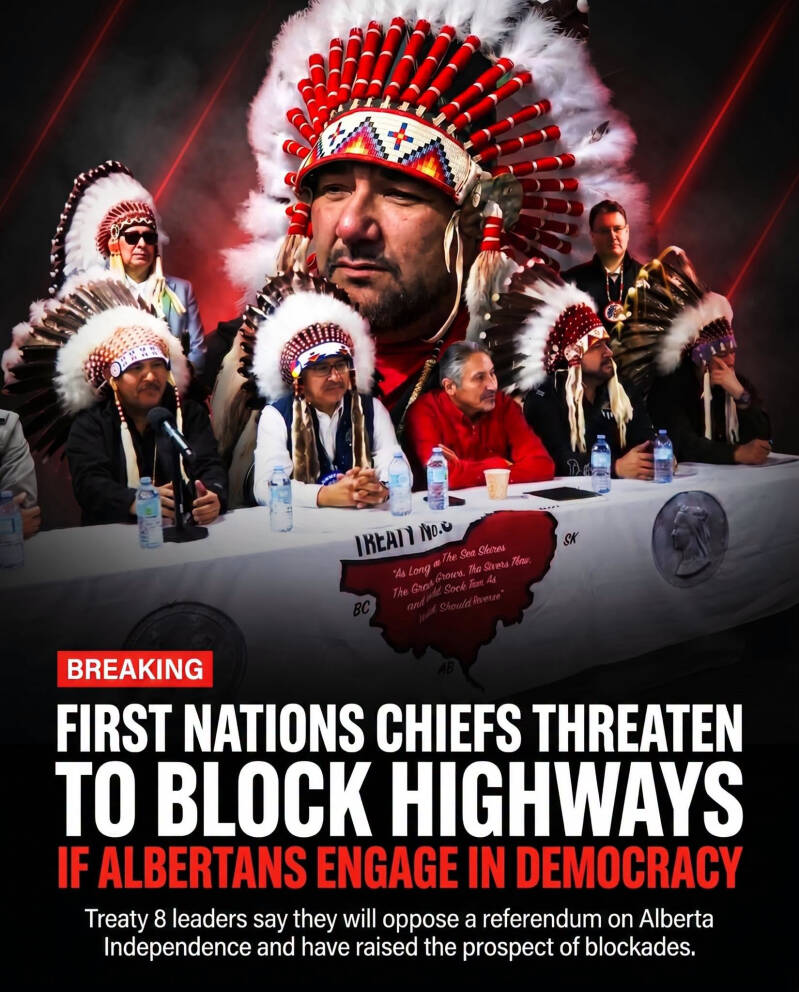
and now this is happening ..
June 4, 2026 posted by
Treaty 8 leaders are now openly talking about blocking highways and getting in the way of industry if Albertans vote on independence.
The irony is incredible.
Jason Kenney, one of the loudest opponents of Alberta independence, passed Bill 1: the Critical Infrastructure Defence Act.
That law was designed specifically to deal with blockades of highways, railways, pipelines, and other critical infrastructure.
So if activists try to block roads to stop Albertans from engaging in democracy, the legal tools to respond may already exist, created by the very premier who opposes independence.
Albertans have the right to vote on their future. That right cannot be held hostage by threats to shut down highways.
Get The Facts From The Source
When truth and Facts matter the most!

ALBERTA Fact Check
For Albertans who are simply fed up with being lied to.

The Carney Files
Tracking Mark Carney's Broken Promises ...
Alberta Prosperity Project
read the Value of Freedom and the plans for an Independent Alberta!

DRUTHERS
A Saskatchewan Newspaper - when the truth matters!
INFORMATION


Contact: Break-FREE Alberta
403-957-0311